
Contact Us Today:
973-316-4900

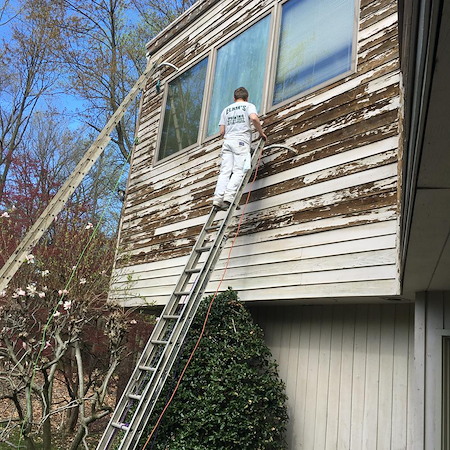
New Jersey weather is tough on paint. Freeze–thaw cycles, humid summers, and long stretches of sun can turn a fresh finish dull or damaged faster than you expect. If you’re seeing early warning signs around your home in Lake Parsippany, Lake Hiawatha, or Mount Tabor, it may be time to plan exterior painting in Parsippany, NJ with Elkins Painting & Wallpapering. Catching issues early protects siding and trim, keeps moisture out, and preserves curb appeal.
Our area deals with four true seasons. Winter brings road salt spray and constant moisture. Spring adds wind-driven rain. Summer turns up the UV. Fall swings temperatures day to night. All of that movement stresses coatings. Below are five clear signs your exterior paint is no longer protecting your home.
Peeling and flaking paint is the classic red flag. You may see curled edges on clapboard, flakes at the bottom of fascia boards, or bare wood where the paint lifts right off. In Parsippany and nearby neighborhoods, this often shows up first on lower trim near walkways where winter splashback keeps surfaces damp, or on older wood windows that expand and contract with temperature changes.
When paint releases, water follows. Exposed wood can discolor, swell, or start to rot. Even small patches matter. If you press a fingernail into the surrounding paint and it lifts easily, the failure is spreading. Never ignore exposed wood, even if the area is small, because moisture intrusion can travel farther than you can see.
Run your hand across a sunny wall and look at your palm. If it comes away white and dusty, that’s chalking. Chalking is a natural breakdown of the paint’s binder under UV exposure and weather. South and west elevations around Parsippany tend to chalk first because they get the most sun. It looks harmless, but it means the coating is wearing thin and losing protection.
Homeowners often notice chalking on painted aluminum or older wood siding after a hot summer. As chalk increases, the color looks lighter, and the surface becomes harder to wash. A simple hand rub test on the sunniest wall is the quickest way to check for chalking. If you see heavy residue, a repaint should be on your short list.
Fading happens when UV light bleaches pigments. You may see ghosted outlines behind shutters or a patchwork of darker color where items shielded the wall. Darker hues tend to fade faster. In New Jersey, the south-facing gables and garage fronts are frequent problem spots. If your siding used to pop and now looks flat or uneven, the film has likely thinned and lost UV resistance.
Fading is more than cosmetic. It often comes with binder breakdown and increased porosity, which leaves surfaces open to moisture and dirt. If you notice fading on one side of the house, compare it to a shaded elevation. If the sunniest wall looks washed out while the shaded wall still looks rich, the coating is near the end of its life.
Blistering shows up as small bubbles or domes under the paint film. These can appear after heavy rain followed by fast heat or when moisture tries to escape from beneath the coating. In areas like lakefront streets around Lake Parsippany, extra humidity can trap moisture in wood pores and cause blisters once the sun hits.
Pop a blister and you’ll often find damp wood or a smooth, unbonded layer beneath. That’s a sign the film is no longer adhering. Left alone, blisters can break and start peeling. If the problem repeats after storms or heatwaves, the system is failing and needs professional attention from a local exterior painter.
Look closely at vertical seams, window sills, and mitered corners. Hairline cracks in paint or missing caulk create channels for water. Freeze–thaw cycles in Parsippany widen those gaps. You might see cupping on horizontal trim, splits at the ends of fascia, or dark lines where water sits and dries. Once joints open, paint quickly starts to chip back from the edges.
Any time you see open joints or wood grain showing through, the protective envelope has been compromised. Even if the surrounding color still looks decent, those weak points will spread under another season of New Jersey weather.
Different materials show failure in different ways. Here’s what local homeowners often see:
The common thread is water. Once paint loses adhesion or flexibility, moisture gets behind it. In neighborhoods like Mount Tabor or Troy Hills, where tree cover keeps sections shaded, damp areas can stay wet longer and push paint off faster. Add winter road spray and you get more cycles of wet, dry, freeze, thaw. That is tough on any coating.
If you see any two of the five signs at once, it’s time to bring in a pro for a full evaluation. That’s especially true after a harsh winter or a summer with long heat waves. A local painter will check the whole system, not just the obvious spots, and outline what it takes to restore protection and appearance.
Want a deeper dive into timing? This article on repaint timing explains how our climate affects service life: how often to repaint a New Jersey home’s exterior. For a broader homeowner perspective, you can also skim these top things to know about house painting before your next project. If you’re still comparing options, you can review the basics and then plan your project with exterior painting in Parsippany, NJ as your main focus for curb appeal and protection.
A thorough evaluation by Elkins Painting & Wallpapering aims to answer one question: is your current coating still protecting your home? During a walk-through, a pro will typically:
From there, you get a plan that matches your home’s materials and exposure. The goal is a durable, even finish that stands up to Parsippany weather and looks great from the street.
Paint problems rarely fix themselves. Peeling edges grow. Chalking spreads across panels. Faded areas keep bleaching. Left alone, you may end up replacing sections of trim or siding that could have been preserved. Acting when the first signs appear usually means cleaner results and less surface replacement later.
If you’re already noticing several warning signs, scheduling professional exterior painting now gives you more calendar options before peak season and helps you beat spring storms.
Set aside a short window on a clear day and do a quick loop:
Start on the south or west wall around midday. That’s where UV and heat work the hardest. Look for faded panels or blistering on trim. Check the bottom two courses of siding near driveways or walkways where plows and splashback keep things wet. Around Lake Parsippany and Lake Hiawatha, watch shady sides for lingering damp that pushes paint loose.
Then step back to the street. Does the front look uneven, with flat patches and shiny patches? That mix often signals binder breakdown from age and sun. None of these checks are about DIY fixes. They are simple ways to decide whether it’s time to talk with a professional.
When your home shows peeling, chalking, fading, blistering, or cracking, the protective shield is fading. Elkins Painting & Wallpapering can help you reset the clock with a long-lasting finish that fits Parsippany’s climate and your style. Call us at 973-316-4900 to schedule a visit, or start planning with our team and learn what your home needs for a flawless result. If you want a smooth, durable finish that stands up to New Jersey weather, book your project with our local experts through our exterior painting service today.
If you want a fresh kitchen without a full remodel, kitchen cabinet refinishing in New Jersey can deliver a clean, factory-like look with less disruption. With Elkins Painting & Wallpapering, the process is planned, contained, and finished using pro-grade systems that outlast basic wall paints. See […]
Between lake humidity, wind‑driven rain, and winter freeze–thaw, Parsippany exteriors take a beating. The good news is that a careful, professional prep process makes exterior finishes last. If you want a smooth, durable result, start by planning exterior painting in parsippany the right way and confirm […]